
The University of Michigan School of Nursing welcomed 20 nurse leaders, educators, policymakers and health care stakeholders from 10 countries across Latin America, the Caribbean, Asia and the Pacific for a weeklong program focused on advancing nurse practitioner education through shared learning, collaboration and global partnership.
The immersive program, “Developing Advanced Practice Nurses Globally,” was held Monday, August 3, through Friday, August 7, 2026. It explored nurse practitioner education, practice, leadership, legislation and political engagement through presentations, discussions and collaborative learning. The event also launched the U-M School of Nursing’s celebration of the Office of Global Affairs’ 30th anniversary, highlighting three decades of global partnerships and impact.
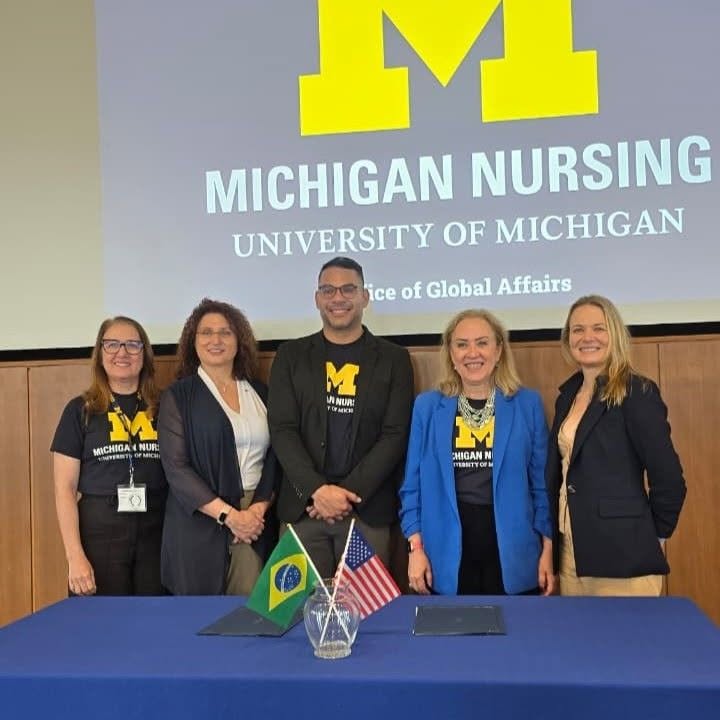
During the week, the U-M School of Nursing also hosted a signing ceremony for a memorandum of understanding between the University of Michigan School of Nursing and the Universidade Federal do Amazonas, further strengthening their shared commitment to planetary health and sustainability. The ceremony included U-M Vice Provost Valeria Bertacco, U-M School of Nursing Dean Allison Webel, Ph.D., RN, FAAN, and U-M School of Nursing Associate Dean for Global Affairs Jeanne-Marie Stacciarini, Ph.D., RN, FAAN.
“A defining strength of this program is its deep commitment to mutual learning, respect and collaboration,” said Dr. Stacciarini.
“While our guests came to explore the development of nurse practitioner education, our faculty, students, staff and community partners also benefited from learning how countries around the world are addressing their own health care challenges. Those conversations strengthen all of us and create lasting partnerships that extend far beyond a single week.”
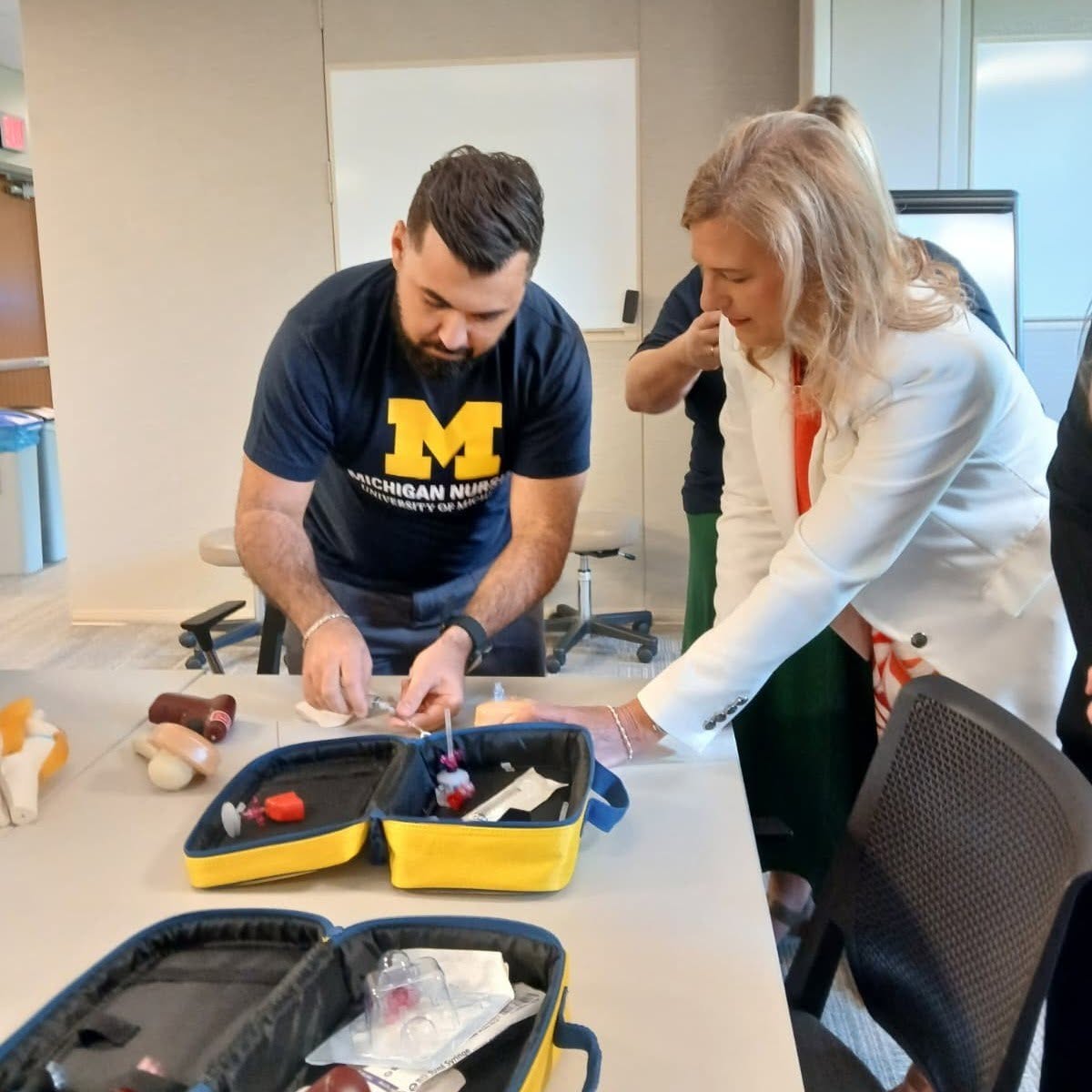
Throughout the week, participants engaged with faculty members, students, staff members and community partners who shared expertise across the full spectrum of advanced practice nursing. Sessions explored curriculum development, clinical education, simulation, leadership, health policy, global competencies and community-based care, while visits to community health organizations and Michigan Medicine offered participants firsthand insight into nurse practitioner practice in a variety of settings. The program concluded with participant-led discussions about opportunities to strengthen nurse practitioner education in their home countries.
“Participating in the Advanced Practice Nursing Program at the University of Michigan School of Nursing has been a truly transformative experience, broadening my perspective and reinforcing my belief that investing in advanced practice nursing means investing in better health outcomes for the population,” said Ludimila Cunha, a member of the Brazilian Federal Council of Nursing, known as COFEN.
“I will return to Brazil inspired by the possibilities of innovation, leadership and professional autonomy, committed to fostering dialogue and advancing initiatives that will help shape the future of nursing.”
While each participant brought a unique perspective shaped by their country’s health care system, a common theme emerged throughout the week: advancing nurse practitioner education requires both local leadership and global collaboration. Participants described returning home with renewed confidence, practical ideas and a stronger commitment to adapting what they learned to meet the needs of their own communities.
“It has been a tremendously valuable professional experience to learn from the experts and leaders in advanced practice nursing at the University of Michigan,” said Juana Mercedes Gutiérrez Valverde of the Autonomous University of Nuevo León in Monterrey, Mexico.
“The program strengthened my perspective on nursing leadership and provided practical knowledge and recommendations that will guide my work to further advanced practice nursing in Mexico. While we have made important progress, we are still in the early stages of developing advanced practice nursing. The need for this education is both clear and urgent.”
The exchange of ideas and experiences throughout the week underscored the value of global collaboration in advancing nursing education and practice. Those shared lessons are at the heart of the U-M School of Nursing’s international partnerships and its ongoing commitment to preparing nurses to address health challenges worldwide. The new agreement with the Universidade Federal do Amazonas further reflects that commitment, creating additional opportunities for collaboration around planetary health, nursing education and shared global priorities.
 “For 30 years, global engagement has been central to how the University of Michigan School of Nursing advances health for all. Bringing together nurse leaders from around the world reflects our commitment to learning with and from one another, building meaningful partnerships and preparing nurses to care, create and lead in every community they serve. These exchanges of ideas strengthen our global community and challenge all of us to think differently about how we educate nurses and improve health,” said Dean Webel.
“Many of the most pressing health challenges of our time extend beyond geographic boundaries and require shared solutions. Programs like this create opportunities for nursing leaders to exchange knowledge, adapt successful approaches to local contexts and accelerate innovation. When we learn from one another across countries and health systems, we expand our collective capacity to improve health and well-being in communities around the world.”
While the program has concluded, its impact is just beginning. Participants returned to their home institutions with new perspectives, practical strategies and expanded professional networks that will help advance nurse practitioner education and support health systems in their own countries.